
Key Takeaway
EcoWater filters elevate everyday drinking water by improving taste and reducing specific contaminants—backed by third-party certifications (NSF/ANSI 42, 53, 58, 61/372) and decades of R&D. Long Island Clean Water Service installs EcoWater and other USA-made systems, then recommends the right fit after testing your water—because the best solution depends on your home, your plumbing, and your water report.
Long Island Clean Water Service (LICWS) is one of Long Island’s oldest and largest residential & commercial water-treatment providers—serving New York and the greater metropolitan area since 1985. Our licensed, factory-trained technicians have installed and serviced thousands of systems across Nassau, Suffolk, and the five boroughs, so we know the nuances of local water conditions (municipal and well) and how to solve “problem water” reliably.
Better water should be simple: great taste, fewer worries, and filters that actually do what the label says. That’s why many Long Island households choose EcoWater—a U.S. manufacturer with rigorous third-party NSF listings and a long track record of product R&D. We love EcoWater for many homes, but we’re not tied to a single brand; we evaluate your water first and then recommend the right USA-made solution for your goals, budget, and plumbing. Ready to talk through options? Connect with our local team.
The Importance of Drinking Water Filtration (and Where EcoWater Fits)
If you’ve ever thought, “My water looks clear—do I really need a filter?”, you’re not alone. The truth is, clarity doesn’t tell the whole story. City water is disinfected (a good thing), but chlorine and its byproducts can affect taste and odor. Private wells have their own quirks, from seasonal shifts to naturally occurring minerals and organics. That’s why drinking water filtration matters: it’s the last step between your tap and your glass—tuning taste, reducing specific contaminants, and giving you confidence in what you’re drinking every day.
EcoWater’s role is pretty simple: match the filter to the job. Their lineup includes systems focused on aesthetic improvements (that “pool” smell or odd flavors), point-of-use reverse osmosis for broad contaminant reduction at the kitchen sink, and whole-home filtration to make every tap feel better. We test first, then pick the configuration that makes sense for your home—sometimes that’s EcoWater, sometimes another USA-made system that’s a better fit.
Why EcoWater? Certifications, Research & Real-World Taste
Certifications matter because they verify performance beyond marketing claims. EcoWater appears in the NSF/ANSI listings for multiple standards:
- NSF/ANSI 42 (Aesthetic Effects) – taste, odor, and chlorine reduction for better-tasting water.
- NSF/ANSI 53 (Health Effects) – reduction claims for health-related contaminants (filter-specific).
- NSF/ANSI 58 (Reverse Osmosis) – membrane systems for broad contaminant reduction at the tap.
- NSF/ANSI 44 (Residential Softeners) – ion-exchange softening performance (when softening is part of the plan).
- NSF/ANSI/CAN 61 & NSF/ANSI 372 – material safety and low-lead content for components in contact with drinking water.
For transparency, you can see EcoWater’s listings in the NSF database here:
NSF Certified DWTU Listings and NSF Company Profile.
EcoWater also shares its product research focus on the Water Research & Development page.
(We summarize key points here so you don’t have to click away.)
What EcoWater Filters Improve Day to Day
Most families notice the difference first in the glass: fewer “pool” smells, coffee that tastes right, and water that just
feels clean. Under the hood, the benefits line up with national guidance from the CDC’s homeowner filter guide and the EPA’s filtration overview:
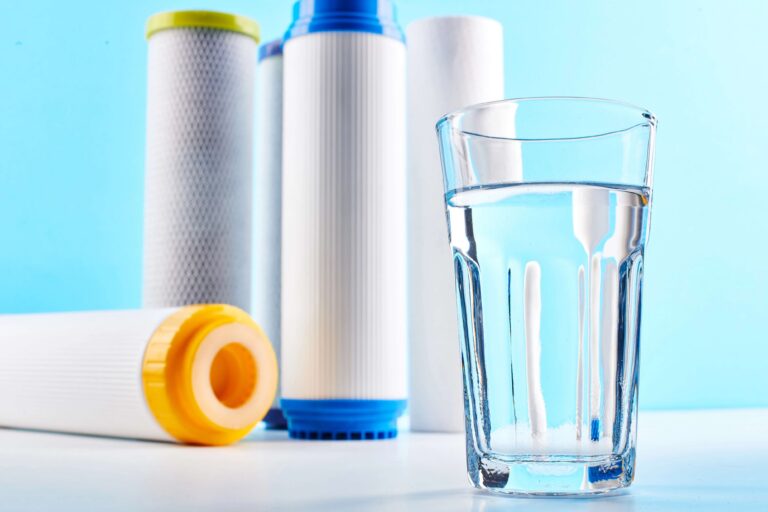
- Cleaner taste & smell (NSF 42) – Activated carbon stages reduce chlorine and many odor-causing compounds.
- Targeted health contaminants (NSF 53 &/or 58) – Specific cartridges and RO membranes are tested for the
reduction claims they list (e.g., lead at the tap with RO, select VOCs with specialty media). - Material safety (NSF 61/372) – Components in contact with water meet standards for low lead and safe materials.
Important note: every cartridge or RO model has specific reduction claims. We test your water and select the configuration that covers your priorities—then set a maintenance schedule so performance stays on spec.
Potential Health Benefits You Can Feel Day to Day
Health isn’t just about what you cut out—it’s also about what you stick with. When water tastes clean and smells right, families naturally drink more of it (hello, better hydration). At the same time, a point-of-use RO system can target the tiny dissolved contaminants most basic filters miss, while carbon stages polish taste and odor. The result is water that’s both easy to love and easy to trust.
Quick double-check: both the CDC and the EPA emphasize two simple rules—match the filter to the contaminant, and replace on schedule.
Quick Facts: EcoWater Filters & Drinking Water Filtration
- EcoWater is a U.S. brand with NSF listings across multiple standards (42, 44, 53, 58, 61/372).
- Point-of-use RO is the most popular way to upgrade drinking/cooking water at the kitchen sink.
- Whole-home carbon improves taste/odor across every tap; RO “polishes” water at the faucet.
- Selection and upkeep should follow EPA/CDC guidance: match filters to contaminants and replace on schedule.
- LICWS installs EcoWater and other USA-made systems and recommends the right setup for your water.
Point-of-Use vs. Whole-Home: What Fits Your Kitchen & Budget?
Your best experience often combines both: a whole-home system for showers, laundry, and plumbing protection—and a dedicated drinking-water filter at the kitchen sink for the highest quality in the glass. Here’s the simple breakdown:
| Option | What It Improves | Why Households Choose It | Typical Maintenance |
|---|---|---|---|
| Point-of-Use RO (EcoWater RO at sink) Drinking water filters |
Great taste; reduction of specific health contaminants (e.g., lead at the tap); bottled-water quality for cooking and drinks. | Best value per glass; avoids plastic bottles; pairs well with whole-home carbon. | Prefilters ~6–12 months; RO membrane ~2–3 years; quick annual check. |
| Whole-Home Carbon Whole-house water filters |
Chlorine/odor reduction to every tap; nicer showers; better-tasting ice and cooking water pre-RO. | Improves the whole home environment; protects plumbing and fixtures. | Cartridge 6–12 months or tank media 3–5 years (system-dependent). |
| Softener (if hardness is an issue) | Scale control for appliances/fixtures; smoother laundry/showers. | Comfort & maintenance savings; works alongside filters and RO. | Salt refills; periodic settings check; see NSF/ANSI 44 for performance. |
Not sure what you need? Start with a quick in-home test, and we’ll map the options to your water and budget—brand-agnostic.
Real-World Experience: What Long Island Homeowners Say
Real Google Review
★★★★★
“We had a whole-house water filtration system installed a few years ago and couldn’t be happier with the results.
LICWS has been a fantastic company to work with—professional, reliable, and easy to communicate with.
Scheduling regular maintenance is always straightforward and hassle-free.”
— Alice Miu
Why Homeowners Choose EcoWater (and When We Recommend Something Else)
Most people start with two goals: “Make it taste better,” and “Help me feel good about what we’re drinking.” EcoWater checks those boxes with certified carbon and RO options, clean installs, and predictable maintenance. It’s not about buying the biggest system—it’s about getting the right system. That’s why we test first, review your water use, and then recommend a setup that balances taste, protection, and budget.
And because we’re brand-agnostic, sometimes we’ll let you know a different USA-made system is the better choice. Maybe you need a higher-capacity tank, a specialty cartridge, or a different media blend for your water chemistry. Our promise is simple—clear options, no pressure, and results we’ll stand behind.
What Makes LICWS Different (and Why We’re Not One-Brand Only)
We install and service EcoWater systems because the performance and certifications are strong—and we install other
USA-made options when they’re a better match. Your home might need a different media blend, a higher-capacity RO, or a specific cartridge for a particular contaminant. Our job is to test, explain options, and stand behind the result—not to
force a logo. If EcoWater is the best fit, great. If another certified system fits better, we’ll recommend that instead.
Innovation That’s Actually Useful (Not Just Tech for Tech’s Sake)
EcoWater invests heavily in product research and refinement—better carbon formulations, reliable RO membranes, and smart monitoring features that make maintenance easier and more predictable. That R&D focus shows up in daily life: cleaner-tasting water, fewer surprises, and systems that are straightforward to live with. If you want to peek behind the curtain, EcoWater highlights its Water Research & Development priorities—but we’ve captured the practical bits here so you can decide without the jargon.
What the Standards Mean (in Plain English)
- NSF/ANSI 42 – Aesthetic: Improves taste, odor, and chlorine—why water simply tastes better.
- NSF/ANSI 53 – Health: Filters are tested for specific health contaminants they claim to reduce.
- NSF/ANSI 58 – RO Systems: Reverse osmosis performance at the tap (membrane-based reduction).
- NSF/ANSI 44 – Softeners: Scale control via ion exchange for homes that need softening.
- NSF/ANSI/CAN 61 & 372 – Materials & Low Lead: Components in contact with drinking water are safe and low-lead.
For background on how these standards work (and why to check certifications), see
NSF’s consumer explainer.
We also follow the practical selection tips in the CDC guide and the EPA overview.
Learn about upgrading your drinking water system with our solutions.
We’ll test your water, review EcoWater and other USA-made options, and build a plan that fits your home.
Request Your Water Review
FAQs About EcoWater Filters & Drinking Water Filtration
Are EcoWater filters the best choice for every home?
Not always—and that’s okay. We recommend EcoWater frequently because of its certifications and build quality, but LICWS carries multiple USA-made systems. We test your water and choose the option that fits your contaminants, flow needs, and budget.
What’s the difference between a whole-home filter and an RO at the sink?
Whole-home carbon improves taste/odor across showers, laundry, and faucets. Point-of-use RO gives you the highest drinking/cooking quality at the kitchen tap. Most families pair both for the best overall experience.
How do I know a filter actually removes what it claims?
Look for NSF/ANSI certifications (e.g., 42 for chlorine/taste, 53 for health contaminants, 58 for RO). We’ll match the cartridge or membrane to your needs and set a replacement schedule so performance stays on spec.
What maintenance should I expect?
Most carbon cartridges are replaced every 6–12 months, RO membranes every 2–3 years, and whole-home media tanks about every 3–5 years (system-dependent). We’ll tailor a plan and handle reminders.
The Best Next Step—Guided by Local Expertise You Can Trust
Choosing a filter shouldn’t be guesswork. As one of Long Island’s oldest and largest residential & commercial
water-treatment providers (serving NY and the greater metro area since 1985), Long Island Clean Water Service (LICWS) brings decades of hands-on experience to your kitchen sink. Our licensed, factory-trained technicians have installed and serviced thousands of systems across Nassau, Suffolk, and the five boroughs, so we know how local water behaves—and which solutions actually hold up in real homes.
Why homeowners trust our guidance
- Evidence-based recommendations: We match equipment to your water test and to the
NSF/ANSI standards that matter (42/53/58/61/372). - Brand-agnostic: We install EcoWater and other USA-made systems; no one-brand pressure—just the right fit for your home.
- Transparent performance: We explain what each certified cartridge or RO membrane is actually listed to reduce, in plain English, before you buy.
- Service you can rely on: Predictable maintenance schedules, reminders, and support from a local team that’s been here since 1985.
If you want better-tasting, confidently filtered water, we’ll start with a quick at-home check, review which
certifications apply to your results, and compare EcoWater with other USA-made options. You’ll get a clear plan,
an upfront cost, and ongoing care that keeps performance on spec.
Learn about upgrading your drinking water system
Further Reading
- NSF Certified DWTU Listings – EcoWater (specific models & claims)
- NSF Company Profile – EcoWater (all certifications)
- NSF Consumer Guide to Standards (what 42/53/58/61/372 mean)
- EcoWater Research & Development (how products are developed/tested)
- CDC – Choosing Home Water Filters (selection & maintenance tips)
- EPA – Home Filtration FAQ (how filters are evaluated)